

The General Electric X-ray machine on display at the south end of the third floor of the Strauss Health Sciences Library was transferred to the library when University Hospital relocated from the 9th Avenue campus.
Manufactured in the 1930s, the machine reflects important advances in early radiographic technology, including the use of the high-vacuum X-ray tube developed by General Electric scientist William D. Coolidge. Coolidge's innovation greatly improved the efficiency, reliability, and image quality of X-ray equipment, helping to establish X-ray imaging as an essential diagnostic tool in modern medicine.
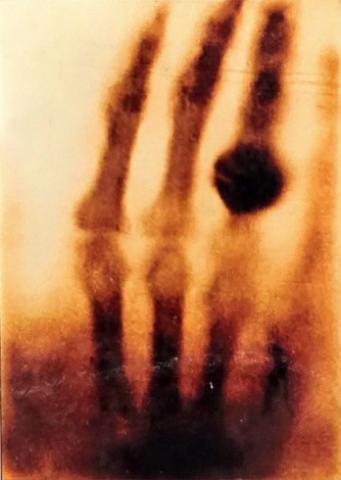
X-rays were discovered accidentally in 1895 by German physicist Wilhelm Conrad Röntgen while he was conducting experiments with cathode rays. The first published X-ray image of Röntgen's wife's hand captured worldwide attention and quickly demonstrated the technology's medical potential. Within months, physicians around the world were using X-rays to diagnose injuries and disease. Despite their rapid adoption, some members of the public viewed the new technology with suspicion, believing it could reveal things that should remain hidden.
Today, the X-ray machine serves as a reminder of the rapid evolution of medical imaging and the transformative impact of radiology on patient care.